Kinetic Strike on AWS UAE: Why Physical Infrastructure is the New Front Line for Data Sovereignty
When the Cloud Meets Kinetic Reality: The AWS UAE Incident
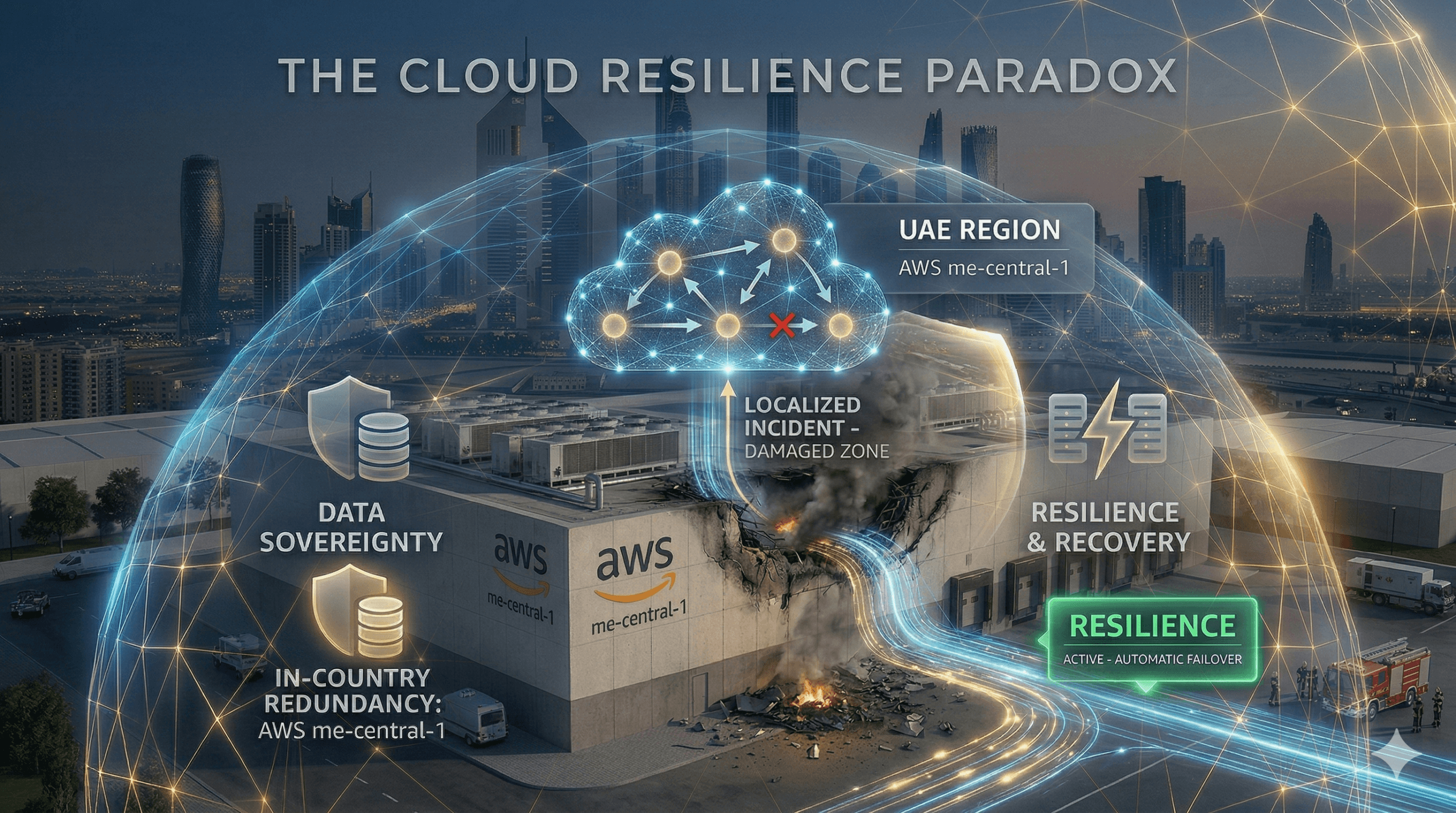
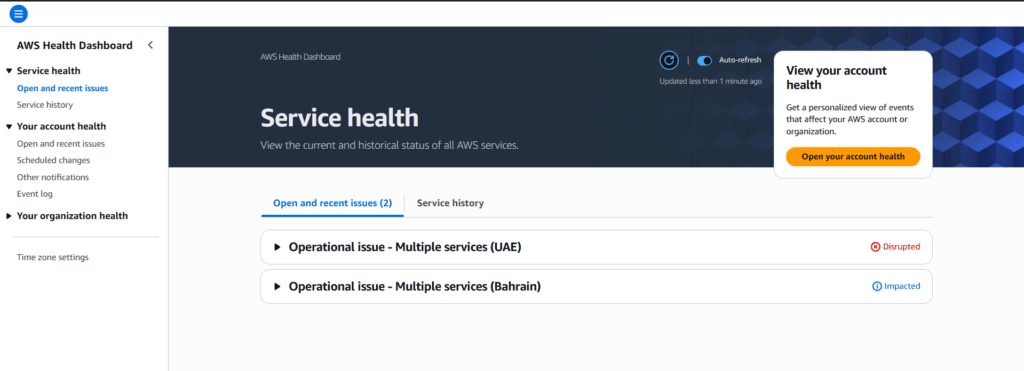
On March 1, 2026, the global tech community witnessed a rare and sobering event. Reports confirmed that an AWS data center in the me-central-1 (UAE) region was physically impacted by “objects”—widely identified as debris from Iranian missile strikes—triggering a fire and an emergency power shutdown in Availability Zone mec1-az2.
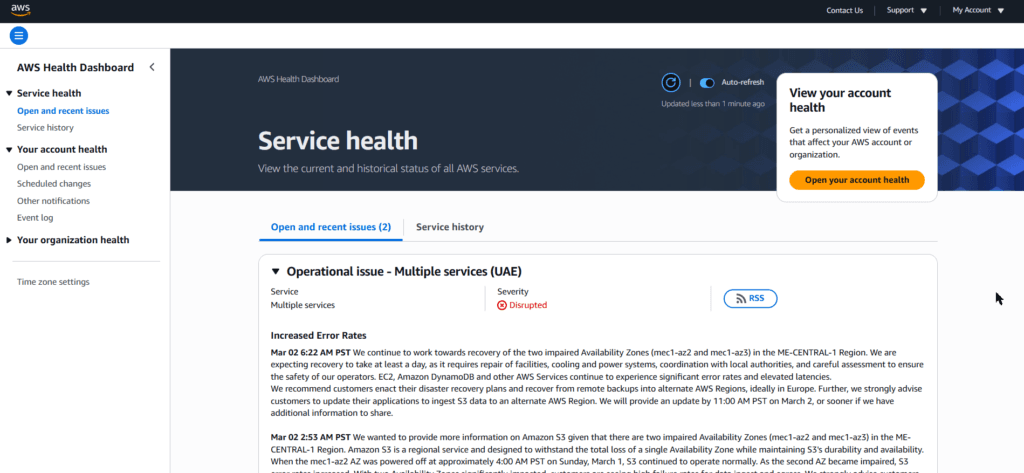
While AWS’s multi-AZ architecture successfully contained the “blast radius” to a single zone, the event has sent shockwaves through the region’s IT leadership. For the first time, we aren’t just talking about code vulnerabilities; we are talking about concrete, steel, and physical security in a conflict zone.
The “Sovereignty Trap” for Schools and Hospitals
This incident exposes a critical flaw in traditional cloud disaster recovery (DR) strategies for UAE entities. If you are a government body, a medical facility, or an educational institution, you are bound by strict UAE data residency laws.
The Paradox:
The Global Solution: “Failover to a region in Europe or the US.”
The UAE Reality: Moving data across borders is a legal violation.
The Result: When the only major cloud region in your country is under physical threat, you are effectively “locked” into that geography. You cannot legally flee the fire.
From “Multi-AZ” to “Multi-Cloud In-Country”
The 2026 strikes have proven that physical proximity matters. If an entire city or industrial zone is targeted, multiple “Availability Zones” in that same city share the same risk profile.
To build true resilience while staying compliant, UAE organizations must shift their strategy:
In-Country Cloud Diversity: Don’t just rely on AWS. Use a secondary in-country provider like Microsoft Azure (UAE) or local sovereign giants like G42/Khazna.
Hybrid Survival Kits: Maintain a “minimal viable” on-premise backup of critical data that can keep the lights on even if the fiber lines or data centers are physically cut.
Kinetic Risk in the DR Plan: Your 2026 risk register must include “Physical Infrastructure Strike” alongside “Ransomware” and “Phishing.”
As a Software Engineer building SaaS and enterprise solutions here in Dubai, I see this incident as a critical case study for our local ecosystem. It’s a reminder that high-performance backend architecture must go hand-in-hand with physical resilience. If you’re navigating the complexities of UAE data residency while trying to maintain 24/7 uptime, let’s connect and discuss how to architect for a truly resilient future.